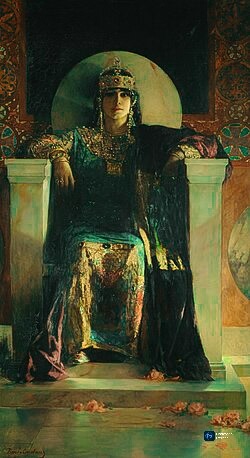
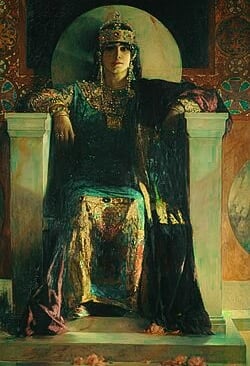
Empress Theodora: The Original Architect of Women's Rights
Before hashtags, before marches, before any of us had a word for it — there was Theodora.
Born in 497 CE to a bear-keeper and a dancer, Theodora grew up in the Hippodrome of Constantinople, performing in a world that offered girls like her almost no protection and even fewer choices. She was an actress, a mime, a comedian — and yes, a sex worker. History has used that last part to dismiss her for fifteen centuries. We're done with that.
Because here's what those same historians conveniently glossed over: Theodora became the most consequential legal reformer for women's rights in the ancient world. And the laws she helped create? They didn't just change Byzantine life. They became the foundation of Western law itself — running directly into English common law, the U.S. Constitution, and international public law. You're living in a world she helped shape, and you probably don't even know her name.
It's time to fix that.Write your text here...
She Knew the System Because She'd Survived It
Theodora didn't theorize about women's suffering from a palace balcony. She'd lived it — as a concubine to an abusive provincial governor, as a woman alone in Alexandria spinning wool to survive, as someone the law had never once protected.
That firsthand knowledge became her superpower.
When she eventually married Emperor Justinian (who literally changed Roman law to make it legal — more on that in a moment) and was crowned Empress in 527, she didn't forget where she came from. She got to work.Write your text here...
What She Actually Did
The body of law produced during her reign, known as the Corpus Juris Civilis, remains one of the most significant legal documents in Western history. Woven into it — unmistakably, undeniably — is Theodora's fingerprint.
She made rape punishable by death. The law applied regardless of the perpetrator's rank or status, and required his property be transferred to the victim. In the sixth century. Let that land.
She ended forced prostitution. No woman could be compelled into sex work. If a woman chose to leave the profession, it became illegal for a brothel-keeper to stop her. When Theodora discovered keepers were getting around this by forcing women to swear oaths never to leave, she made those oaths illegal too — and assigned both the provincial governor and the local bishop to enforce compliance. She knew exactly which men held power over these women, because one of them had once held power over her.
She blew up the class marriage ban. For centuries, Roman law forbade marriage between noblemen and women of lower social standing — which, practically speaking, locked a huge population of women out of legal protection and social mobility forever. Theodora had this ban removed, without support from either secular law or the Church. Her personal conviction alone drove the reform. Overnight, women who had been legally invisible could marry into noble houses and access real power.
She overhauled divorce law. Under the old system, divorce required mutual consent — meaning a husband could simply refuse, trapping his wife indefinitely while he freely lived his life outside the home. (Women weren't even permitted on the street without a male escort.) Theodora struck this law down.
She required equal financial standing in marriage. Traditionally, brides offered dowries and grooms offered a token gesture in return. Theodora mandated the groom's contribution be equal to the bride's. Equal to the bride. Her message was always clear.
She required brides to consent twice — once at the proposal and again before the ceremony — giving women the legal right to change their minds before entering a lifelong commitment.
She protected incarcerated women. When women required imprisonment, Theodora's laws forbade housing them in common jails where male guards could abuse them without consequence. She had a separate facility built — supervised entirely by women.
She Ruled as an Equal, Not a Footnote
Justinian is considered one of the greatest emperors in Byzantine history. When he held court, Theodora sat beside him — not behind him, not below him. She addressed dignitaries freely. She disagreed with her husband openly, in front of the court, and he welcomed it. They debated policy as partners.
She also ran what historians have described as a near-parallel government from her imperial chambers, where women and men alike came to plead their cases directly to her. She meted out justice with precision, and she didn't believe in double standards — famously having a nobleman flogged after he complained that his prospective bride (one of Theodora's theater friends) wasn't a virgin. Her response was essentially: you frequent brothels freely and dare demand purity in a wife?
Theodora did not have time for hypocrisy.
Why Don't We Know Her?
Almost everything recorded about Theodora's early life comes from a single source: Procopius of Caesarea, a sixth-century historian with a personal axe to grind, who described her in terms so lurid and degrading they read less like history and more like a smear campaign written by someone who resented powerful women.
Western historians largely accepted his framing — because, as has always been the pattern, a woman's sexual history was considered sufficient reason to discount everything else about her.
We're calling that out for what it is.
Theodora's legacy is not a footnote. It is a foundation. She looked at a world that had used her, dismissed her, and left her legally unprotected — and she rewrote the rules. Not metaphorically. Literally, in legal code, with teeth.
She is one of ours. And it's long past time we claimed her.